

新闻资讯
Latest News
2026/05/25

2026/05/23
Non-Contact Infrared Thermometers in 2026: The Essential First Line of Defense for Telehealth and Home Health Monitoring
Release time:2026-05-25
The non-contact infrared thermometer has evolved from a pandemic-era screening tool into an indispensable component of modern healthcare delivery. In 2026, as telehealth adoption stabilizes at sixty-seven percent above pre-pandemic baselines and remote patient monitoring generates an average ROI of 22.2 percent for hypertension management alone, the humble forehead thermometer has become the gateway device connecting patients to digital health ecosystems. For healthcare providers, caregivers, and global buyers, understanding how clinical-grade non-contact thermometers integrate into telehealth workflows is essential for delivering effective remote care.

From Emergency Screening to Daily Health Monitoring
The transformation of non-contact infrared thermometers has been remarkable. What began as a rapid fever screening tool for infectious disease outbreaks has matured into a precision instrument capable of supporting continuous health monitoring at home. Modern devices deliver temperature readings within approximately one second, with clinical studies confirming high sensitivity and specificity for detecting fever when used according to proper protocols.
This evolution aligns with broader shifts in healthcare delivery. With nearly 87 percent of U.S. hospitals offering telemedicine services and the global telehealth market forecasted to exceed 450 billion dollars by 2030, healthcare is increasingly happening outside traditional clinical settings. Non-contact infrared thermometers serve as the first data point in many remote consultations, providing physicians with objective temperature measurements that inform diagnostic and treatment decisions without requiring an in-person visit.
Clinical Accuracy: What the Research Shows
Clinical validation studies have provided valuable insights into the accuracy and reliability of non-contact forehead thermometers. Research demonstrates that these devices possess high sensitivity and specificity for detecting fever when operated correctly. A controlled study comparing forehead infrared thermometers against reference standards found that measurements taken approximately three centimeters from the central forehead produced the strongest correlation with core body temperature.
The importance of proper technique cannot be overstated. Accuracy depends on holding the instrument at the correct distance, targeting the central forehead rather than the temple or nasal areas, and avoiding measurements on sweaty or hair-covered skin. Environmental factors such as drafts and ambient temperature variations also influence readings. Devices like the FC-IR202 from Finicare incorporate environmental compensation algorithms and multi-point detection to minimize these variables, delivering consistent results that healthcare professionals can rely on.
For postoperative patients and other vulnerable populations, clinical studies have shown that non-contact forehead thermometers provide readings with good correlation to tympanic measurements, making them suitable for routine vital sign monitoring in both clinical and home settings. While very young infants may still require axillary measurement for the highest precision, non-contact thermometers offer a practical and acceptable alternative for children and adults across a wide range of healthcare scenarios.
The Advantages That Drive Adoption
Several inherent advantages make non-contact infrared thermometers particularly well-suited for telehealth and home health applications. The most obvious benefit is speed. A temperature reading obtained in under one second means that patients can capture and share vital data without friction, improving compliance with remote monitoring protocols.
Hygiene is equally important. Because these devices require no physical contact, they eliminate cross-contamination risks entirely. This is critical in multi-patient households, elder care facilities, and clinical environments where infection prevention is paramount. Caregivers can check temperatures without disturbing a sleeping child, and healthcare workers can screen multiple patients rapidly without changing disposable probe covers between each measurement.
Patient acceptance is another significant factor. Clinical trials have found non-contact thermometers significantly more acceptable than traditional mercury-in-glass axillary thermometers, particularly for pediatric populations. When patients are comfortable with the measurement process, they are more likely to comply with regular monitoring schedules, producing the longitudinal data that makes remote patient monitoring effective.
Integration with Telehealth and Remote Monitoring
The true power of non-contact infrared thermometers emerges when they connect to broader digital health platforms. Modern devices increasingly feature memory functions that track temperature trends over time, Bluetooth connectivity that syncs readings to smartphone applications, and compatibility with electronic health record systems. This integration transforms a single temperature measurement into a data point within a comprehensive health profile.
For telehealth providers, having access to a patient's temperature history before a consultation begins enables more efficient and informed care. A parent reporting a feverish child can share a week of temperature readings rather than a single number, revealing patterns that inform diagnosis and treatment. For chronic disease management, regular temperature monitoring can detect early signs of infection in immunocompromised patients, triggering intervention before conditions become serious.
The remote patient monitoring sector, expected to surpass twenty-nine billion dollars by the end of the decade, depends on reliable home medical devices that patients can operate independently. Non-contact infrared thermometers meet this need perfectly. Their intuitive operation requires minimal training, and their instant readings provide immediate feedback that encourages continued use. As healthcare systems increasingly reimburse remote monitoring services, the demand for validated, connected thermometers will only grow.
What to Look for in a Clinical-Grade Non-Contact Thermometer
Selecting the right non-contact infrared thermometer for telehealth or home health applications requires attention to several key specifications. First, verify that the device has been clinically validated according to recognized standards such as ASTM E1965-98 or ISO 80601-2-56. These certifications confirm that the thermometer has been tested under controlled conditions and meets accuracy requirements.
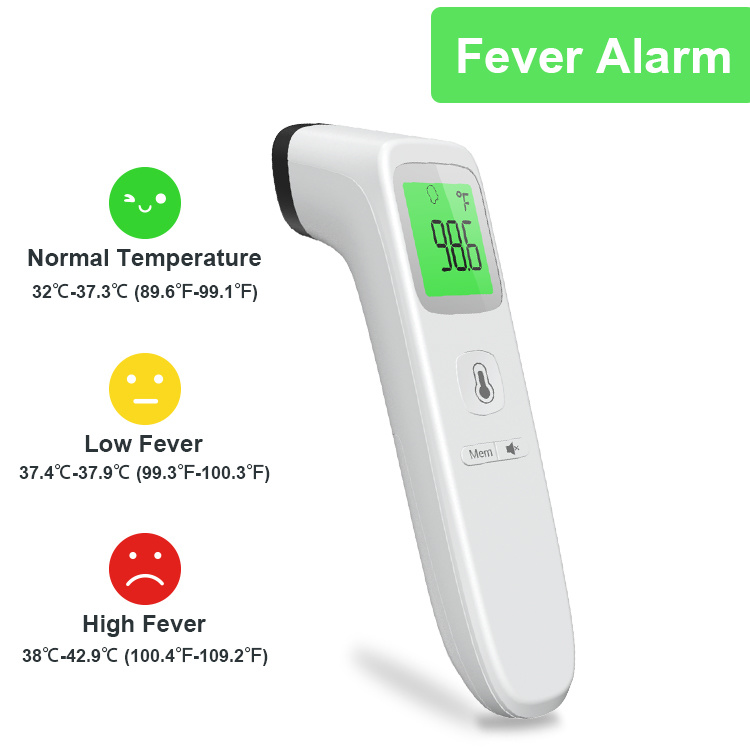
Measurement precision should be clearly specified, with clinical-grade devices typically offering accuracy within plus or minus 0.2 degrees Celsius. Look for devices that compensate for ambient temperature variations and provide consistent readings across the expected range of operating conditions. Fever alert systems that provide visual or audio warnings when temperatures exceed normal thresholds add valuable functionality for home users.
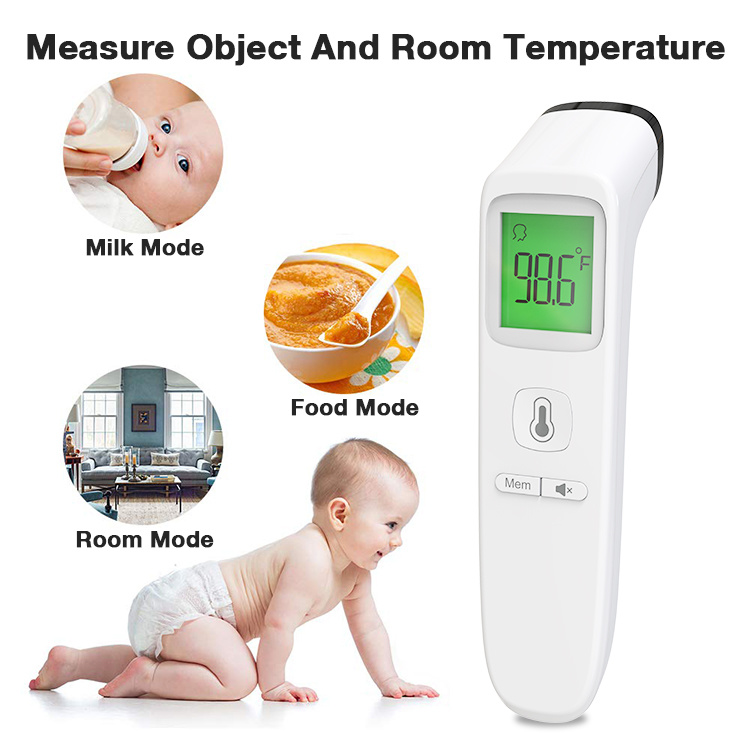
For telehealth integration, consider devices that offer data storage, Bluetooth connectivity, or compatibility with health monitoring applications. The ability to track temperature trends over time and share readings with healthcare providers transforms a simple thermometer into a connected health device. Multi-mode capability, including object and ambient temperature measurement, adds versatility for users who need more than just body temperature screening.
Finicare FC-IR202: Designed for Connected Care
The FC-IR202 non-contact infrared thermometer from Finicare exemplifies the convergence of clinical accuracy and user-friendly design that defines the 2026 market. Engineered to meet FDA clearance and CE MDR certification standards, the device delivers forehead temperature measurements with the precision required for both clinical and home health applications.
Key features include multi-mode measurement capability for forehead, object, and ambient temperature detection, fever alert indicators for instant visual feedback, and memory storage for tracking temperature trends over time. The environmental compensation algorithms ensure consistent readings despite variations in room temperature, while the ergonomic design makes one-handed operation intuitive for users of all ages.
For OEM partners and healthcare system buyers, the FC-IR202 offers the regulatory credentials and clinical validation required for integration into telehealth platforms and remote patient monitoring programs. The device's compliance-first design approach means it arrives ready for market entry across North America, Europe, and other regulated jurisdictions without the delays and costs of post-market certification.

The Future of Temperature Monitoring in Digital Health
Looking ahead, the role of non-contact infrared thermometers in healthcare will continue to expand. The handheld non-contact infrared thermometer market is growing steadily, driven by telehealth infrastructure investment, hospital digital transformation, and consumer demand for connected health devices. Wearable temperature monitoring technologies are emerging, but non-contact forehead thermometers remain the most accessible and widely adopted solution for immediate temperature assessment.
As artificial intelligence integration within the telehealth sector accelerates, temperature data from home devices will increasingly feed into predictive analytics that identify health deterioration before symptoms become obvious. The sixty-four percent of younger adults already logging digital health metrics represent a generation comfortable with data-driven self-care, and non-contact thermometers are the entry-level device that introduces them to connected health monitoring.
For healthcare providers, the message is clear. Non-contact infrared thermometers are no longer optional accessories but essential tools for delivering effective remote care. For patients, they represent the first and most accessible step toward taking control of personal health through data. And for global buyers sourcing medical devices, choosing validated, connected thermometers from manufacturers with established regulatory track records is the foundation for building reliable telehealth and home health product lines.
Keywords: non-contact infrared thermometer, forehead thermometer clinical accuracy, telehealth temperature monitoring, fever detection device, home health thermometer, FDA cleared infrared thermometer, CE MDR certified thermometer, infrared thermometer telehealth integration, remote patient monitoring thermometer, clinical grade forehead thermometer, non-contact thermometer market 2026, OEM infrared thermometer manufacturer, Bluetooth connected thermometer, digital health thermometer, infrared thermometer validation standards
Previous
Previous
Just for you
Send Inquiry




+86 150 9994 2654
201 and 301 of Building A22, Building A22 and A23, No.4 Industrial Park, Tantou Community, Songgang Street, Bao'an District, Shenzhen 518105 China
Friendship link: